
Crypto futures trading has become one of fastest-growing segments in the cryptocurrency industry. Traders use futures contracts to speculate on Bitcoin and altcoin price movements with 1x to 2000x leverage, allowing them to potentially amplify profits in both bull and bear markets.
However, choosing best app for futures trading crypto can be challenging because every exchange offers different fees, leverage limits, trading tools, and security features. Some platforms focus on beginner-friendly interfaces, while others provide advanced derivatives tools for professional traders.
What Is Crypto Futures Trading?
A crypto futures contract is an agreement to buy or sell a cryptocurrency at a predetermined price at a future date or time. While traditional futures contracts typically have an expiration date, crypto futures do not have an expiration date as they are perpetual futures contracts.
Crypto Futures are derivative trading products that follow the price of a cryptocurrency like Bitcoin or Ethereum. They allow traders to speculate on price movements without actually owning the crypto asset. One of the biggest advantages of futures trading is leverage, which lets traders open larger positions with a smaller amount of capital.
Example of Crypto Futures Trading
Let’s understand this with a simple example:
- Rahul has ₹10,000 for trading.
- Rahul believes Bitcoin’s price will increase.
- He opens a Bitcoin Futures trade with 10x leverage.
With 10x leverage, Rahul can control a position worth ₹1,00,000 even though he only invested ₹10,000 himself.
- Rahul’s own money: ₹10,000
- Borrowed funds through leverage: ₹90,000
- Total trade size: ₹1,00,000
If Bitcoin’s price moves up, Rahul’s profits can be much higher compared to normal spot trading. However, if the market moves against him, losses can also increase quickly because leverage works in both directions.
Key Concepts to Know
- Long Trade: You open a long position when you think the crypto price will go up.
- Short Trade: You open a short position when you expect the price to fall. Futures trading allows traders to profit in both rising and falling markets.
- Leverage: Leverage lets you trade a larger amount with smaller capital. For example, with ₹2,000 and 10x leverage, you can open a trade worth ₹20,000.
- Margin: Margin is the amount you deposit to open a leveraged futures trade.
- Liquidation: If the market moves against your trade and your margin becomes too low, the exchange automatically closes your position. This is called liquidation.
- Perpetual Futures: These are futures contracts with no expiry date and are the most popular type of crypto futures trading.
- Spot vs Futures Trading: Spot trading means buying the actual cryptocurrency, while futures trading means trading contracts based on crypto prices without owning the coin directly.
Best Crypto Futures Apps in India
To help Indian traders choose right crypto futures trading app, I compared each platform based on the features that actually matter in real trading. Instead of only focusing on popularity, I looked at trading experience, fees, security, and overall futures trading performance.
Here are the main factors I considered while ranking these apps:
- INR Deposits & Withdrawals: I checked whether users can easily add or withdraw money using UPI, bank transfer, or other Indian payment methods.
- Trading Fees: I compared maker and taker fees, funding charges, and other hidden costs that can impact profits during active trading.
- Leverage Options: I reviewed how much leverage each platform offers on popular pairs like BTC/USDT and ETH/USDT.
- Liquidity & Order Execution: High liquidity is important for smooth trade execution without major slippage.
- Mobile App Experience: Since most Indian users trade on smartphones, I tested how beginner-friendly and smooth each mobile app feels.
- Security & Compliance: I reviewed security features like 2FA, proof of reserves, and whether the exchange follows Indian compliance standards.
- Available Futures Pairs: Platforms with more futures trading pairs provide more trading opportunities.
- Trading Tools: I checked charting tools, indicators, and order types useful for futures traders.
- Risk Management Features: Features like stop-loss, take-profit, and margin controls help traders manage risk more effectively.
- Customer Support: I also considered how quickly platforms respond to Indian users during trading or account-related issues.
1. CoinDCX
Best For: Beginners, INR-based traders, mobile futures trading.
Website Link – CoinDCX Link
If you are new to crypto futures trading, chances are you have already heard about CoinDCX. It is one of most popular crypto exchanges in India and is widely used by both beginners and experienced traders.
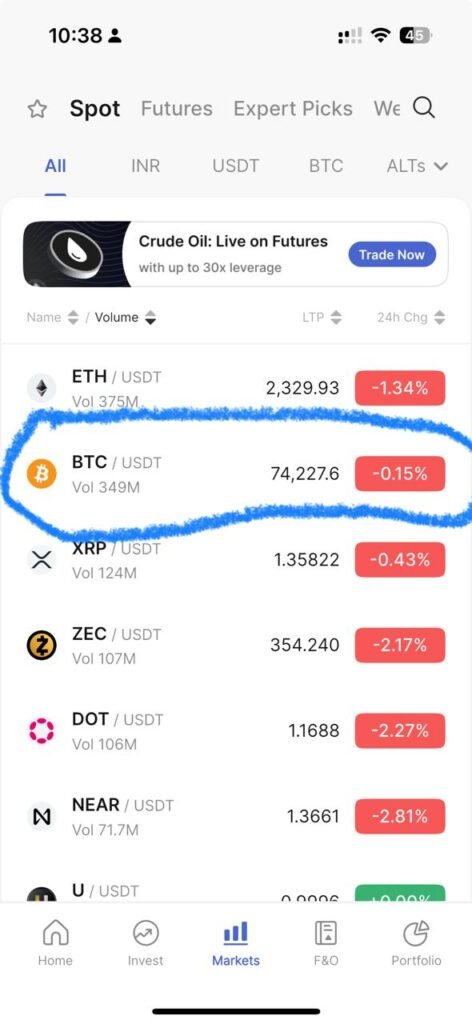
One of biggest reasons behind CoinDCX’s popularity is its easy INR support. You can quickly add money using UPI, NEFT, or IMPS and start futures trading without dealing with complicated crypto transfer processes. This makes the platform much easier for beginners who are entering crypto trading for the first time.
CoinDCX also offers access to hundreds of futures trading pairs along with leverage trading options on selected contracts. Whether you want to trade Bitcoin, Ethereum, or trending altcoins, the platform gives plenty of options.
From a security and compliance perspective, CoinDCX follows Indian KYC and AML requirements and is registered with India’s Financial Intelligence Unit (FIU). For many Indian traders, this adds an extra layer of trust while choosing a crypto futures trading platform.
Pros
- Up to 100x leverage on perpetual futures
- Direct INR margin trading — no USDT hassle
- 300+ futures trading pairs
- Beginner-friendly mobile app with guided trading experience
- FIU-registered and KYC-compliant
- Minimum trading support starting from ₹100
- Integrated TradingView charting tools
Cons
- Advanced traders may find the derivatives toolkit somewhat limited compared to Delta Exchange
- Some community reports mention occasional platform lag during peak market volatility sessions
2. Delta Exchange India
Best For: Advanced traders, scalpers, high-frequency futures and options traders
Website Link – DeltaExchange Website
Delta Exchange is in a different category compared to CoinDCX. This platform was built from ground up for crypto derivatives trading. If your primary goal is serious futures and options trading rather than casual investing, Delta Exchange is platform most active Indian traders in crypto communities recommend.
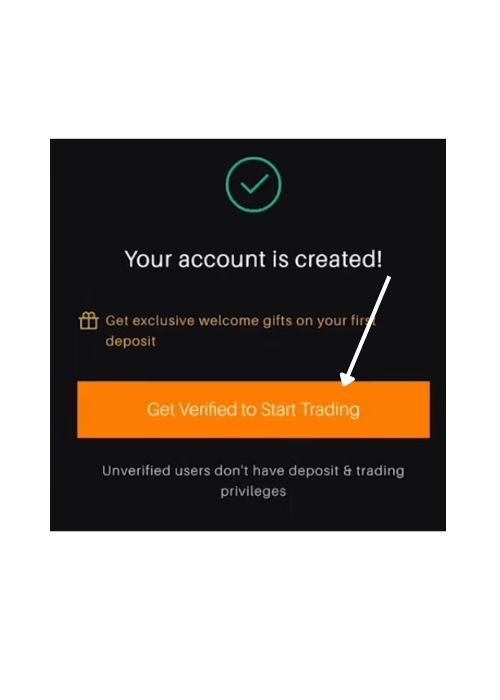
Delta Exchange is also FIU-registered for its Indian operations, so it operates within the regulatory framework that Indian authorities have established for Virtual Digital Asset (VDA) service providers.
Pros
- Built exclusively for crypto derivatives trading
- Perpetual futures, expiry futures, and options all available
- Advanced order types: conditional orders, bracket orders, TWAP
- High-performance trading engine suited for scalpers
- INR deposit support for Indian users
- FIU-registered and compliant with Indian regulations
- Professional-grade interface with deep liquidity on major pairs
Cons
- Not beginner-friendly — the interface can feel complex for new traders
- Spot investing options are limited; this is a derivatives-first platform
- The learning curve is steeper than CoinDCX or CoinSwitch
3. CoinSwitch
Best For: First-time futures traders, mobile-first users, easy INR onboarding
Website Link – CoinSwitch Link
CoinSwitch is FIU-registered, which means it meets the same baseline regulatory requirements as CoinDCX and Delta Exchange. CoinSwitch has a large and growing user base in India, with particular popularity among younger traders who prefer mobile-first experiences.
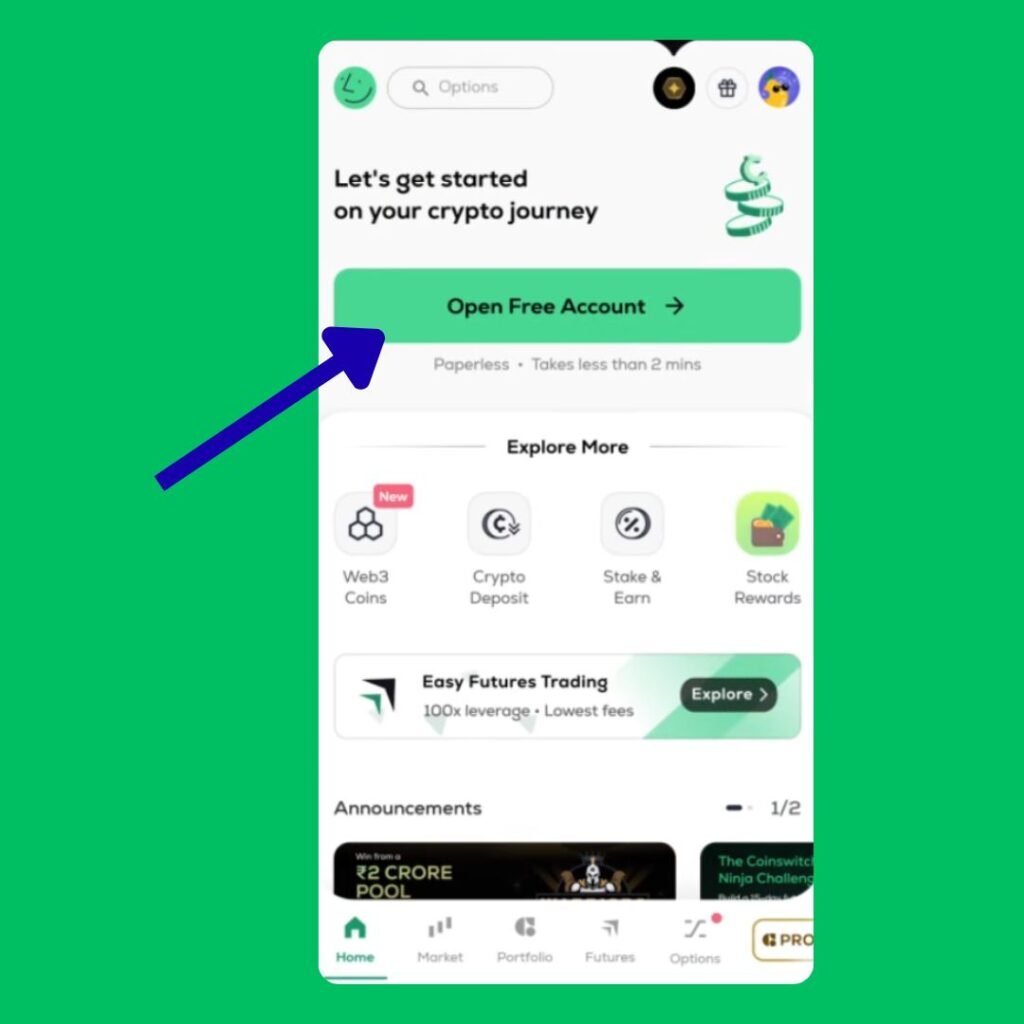
CoinSwitch is known for offering one of simplest and most beginner-friendly crypto trading apps in India. Over the past year, the platform has also expanded its futures and leverage trading features for users interested in advanced trading.
CoinSwitch also includes TradingView charts, which help users analyze price movements and basic trading patterns directly inside the app. This makes futures trading easier for new traders who are learning technical analysis.
Pros
- Clean, intuitive mobile UI built for Indian retail users
- Easy INR deposits via UPI and bank transfer
- Leverage trading with up to 100x on select pairs
- Integrated TradingView charts for technical analysis
- FIU-registered and KYC-compliant
- Beginner-friendly onboarding with educational content
- Strong customer support infrastructure for Indian users
Cons
- Advanced derivatives tools and order types are more limited than Delta Exchange
- Professional traders may outgrow the platform quickly
CoinDCX vs Delta Exchange vs CoinSwitch
| Feature | CoinDCX | Delta Exchange | CoinSwitch |
| Best For | Overall Trading | Professional Futures | Beginners |
| Max Leverage | Up to 100x | Up to 200x | Up to 100x |
| INR Support | Yes | Yes | Yes |
| Futures Focus | Medium | Very High | Medium |
| UI Simplicity | Excellent | Advanced/Complex | Excellent |
| Spot Trading | Yes | Yes | Yes |
| Trading Tools | Good | Advanced & Pro | Beginner-Friendly |
| Options Trading | No | Yes | No |
| FIU Compliance | Yes | Yes | Yes |
| Ideal User | Beginner + Intermediate | Pro & Active Traders | First-time Traders |
Which Crypto Futures App Is Best for Beginners in India?
If you are new to crypto futures, most important thing is not chasing the platform with highest leverage or most trading pairs. Most important thing is not getting liquidated in your first week. For beginners, CoinSwitch and CoinDCX are consistently better starting points because:
- Both offer simple, mobile-friendly interfaces that do not require prior derivatives experience
- INR onboarding is seamless you are not forced to deal with USDT or foreign exchanges
- Both platforms are FIU-registered, which offers a level of regulatory assurance
- Educational content and beginner guides are more accessible on these platforms
- The risk management tools (stop-loss, position size recommendations) are surfaced more prominently for new users
Which App Is Best for Professional Crypto Futures Traders?
For experienced Indian traders who actively scalp, use high-frequency strategies, or trade options alongside futures, Delta Exchange is standout choice. Here is why professional trading community in India gravitates toward it:
- Trading engine is faster and more reliable under high-volatility conditions
- Advanced order types (bracket orders, conditional orders) support more sophisticated strategies
- Options trading is available alongside perpetual and expiry futures a combination rare in Indian market
- Deeper liquidity on major pairs means less slippage on large orders
- Interface, while complex, rewards experienced traders with precise control over their positions
Is Crypto Futures Trading Legal in India in 2026?
Cryptocurrency is not illegal in India. People can legally buy, sell, and hold crypto assets. However, cryptocurrencies are not considered official legal tender by the Indian government. The government refers to cryptocurrencies as Virtual Digital Assets (VDAs) and has introduced taxation rules for crypto trading.
Crypto Tax Rules in India
If you trade crypto in India, taxes are extremely important to understand.
Here are the main crypto tax rules:
- 30% Tax on Profits: Profits earned from crypto trading, including futures trading, are taxed at a flat 30% rate.
- 1% TDS on Transactions: A 1% Tax Deducted at Source (TDS) may apply on certain crypto transactions above specified limits.
- No Loss Adjustment: Losses from crypto cannot usually be adjusted against stock market or other investment profits.
Because crypto taxation can become complicated, many active traders consult tax professionals while filing Income Tax Returns (ITR).
Risks of Crypto Futures Trading
Crypto futures trading can offer high profit opportunities, but the risks are also very high. Some major risks include:
- High Market Volatility: Crypto prices can move sharply within minutes.
- Leverage Risk: Leverage can increase profits, but it can also increase losses very quickly.
- Liquidation: If the market moves heavily against your trade, your position may get automatically closed.
- Regulatory Changes: Crypto rules in India are still evolving, and future regulations may impact trading platforms or derivatives trading.
Because of these risks, beginners should always start with low leverage and proper risk management strategies.
Crypto futures trading market in India has grown rapidly, and today traders have several good platform options based on their experience level and trading style. If you are a beginner, CoinDCX and CoinSwitch are great starting points.
Both platforms support INR deposits, follow Indian compliance standards, and offer beginner-friendly mobile apps that make futures trading easier to understand. CoinDCX is better for users who want more trading features and advanced tools, while CoinSwitch is ideal for users who prefer a simpler and cleaner app experience.
For advanced traders, Delta Exchange is one of strongest choices in India. Platform is designed mainly for futures and options trading and offers more professional trading tools for experienced users. No matter which platform you choose, always remember that crypto futures trading is highly risky. Leverage can increase profits, but it can also lead to large losses within minutes if the market moves against your trade.